Why is the bill more than the menu price?
Short answer
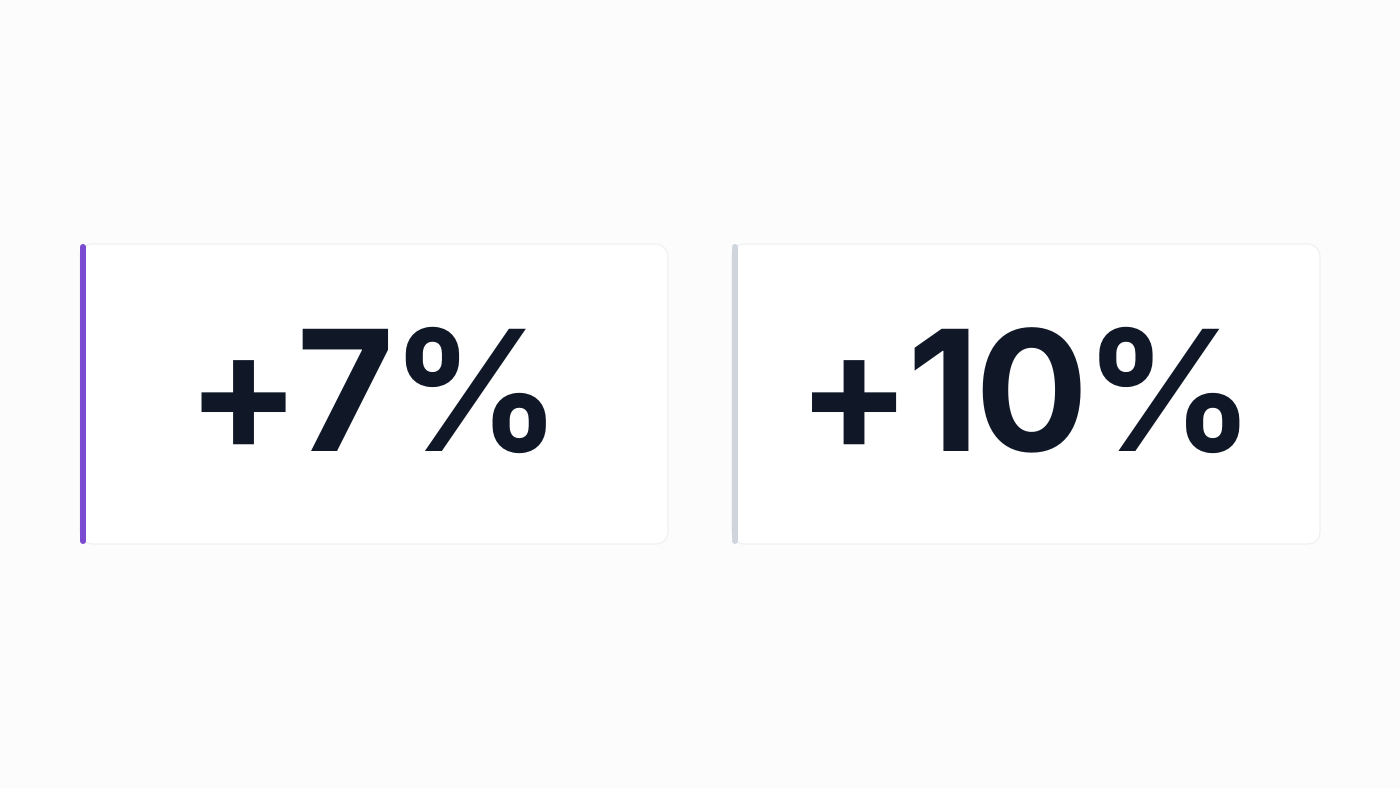
Two lines get added wherever there is table service: 7% tax and a service charge that should not exceed 10%. The restaurant has to show both before you order — and where it did not, the Consumer Protection Board's stated position is that you do not have to pay the service charge.
The two things that get added
At a hotel, a mall restaurant or anywhere with table service, the number on the menu is often quoted before tax and service. Value added tax is 7%, the Revenue Department's current rate. Above it sits a service charge, which is not a tip in the sense most visitors mean: it is revenue the business collects and divides among its service staff each month, and it counts as part of their pay.
The shorthand for this on a Thai menu is "++" — one plus for the service charge, one for the tax. A dish printed at 200 baht ++ lands on the bill at about 235.
The restaurant has to tell you before you order
The duty is statutory rather than customary. Section 28 of the Prices of Goods and Services Act B.E. 2542 (1999) lets the price commission require operators to display the price of goods and services, and Section 40 fines a business up to 10,000 baht for not displaying it, or for not following the rules on how. The display has to be open and legible, so that a customer knows before deciding.
The Consumer Protection Board applies the same logic to the service charge: it must be posted in advance, on the menu or at the entrance. No rule fixes the exact spot, only that a customer can plainly see it — and where it was not shown clearly and completely, the Board's stated position is that the customer does not have to pay it.
Why a street stall never does this
VAT registration only begins above 1.8 million baht of annual turnover. A noodle cart, a market stall and most family kitchens sit well under that line, so there is no tax to add and no service charge to divide. The number chalked on the board is the number you hand over.
The two worlds are separate economies on the same street, and the bill only surprises you crossing from one to the other. Where a place charges service above 10%, or never displayed it, the Department of Internal Trade takes price complaints on 1569 and the Consumer Protection Board on 1166. Charging an unjustifiable price is prohibited separately by Section 29, and punished under Section 41 by up to seven years' imprisonment, a fine of up to 140,000 baht, or both.
Good to know
- "++" on a menu means service charge and tax are still to come
- 7% tax, and a service charge that should not exceed 10%
- Not displayed in advance? The Consumer Protection Board says you need not pay it
- Street stalls add neither — VAT registration starts above 1.8 million baht of turnover