Do I eat Thai food with chopsticks?
Short answer
No — spoon and fork, and the spoon is the one that goes in your mouth. Reaching for chopsticks is the most common visitor misfire in the region.
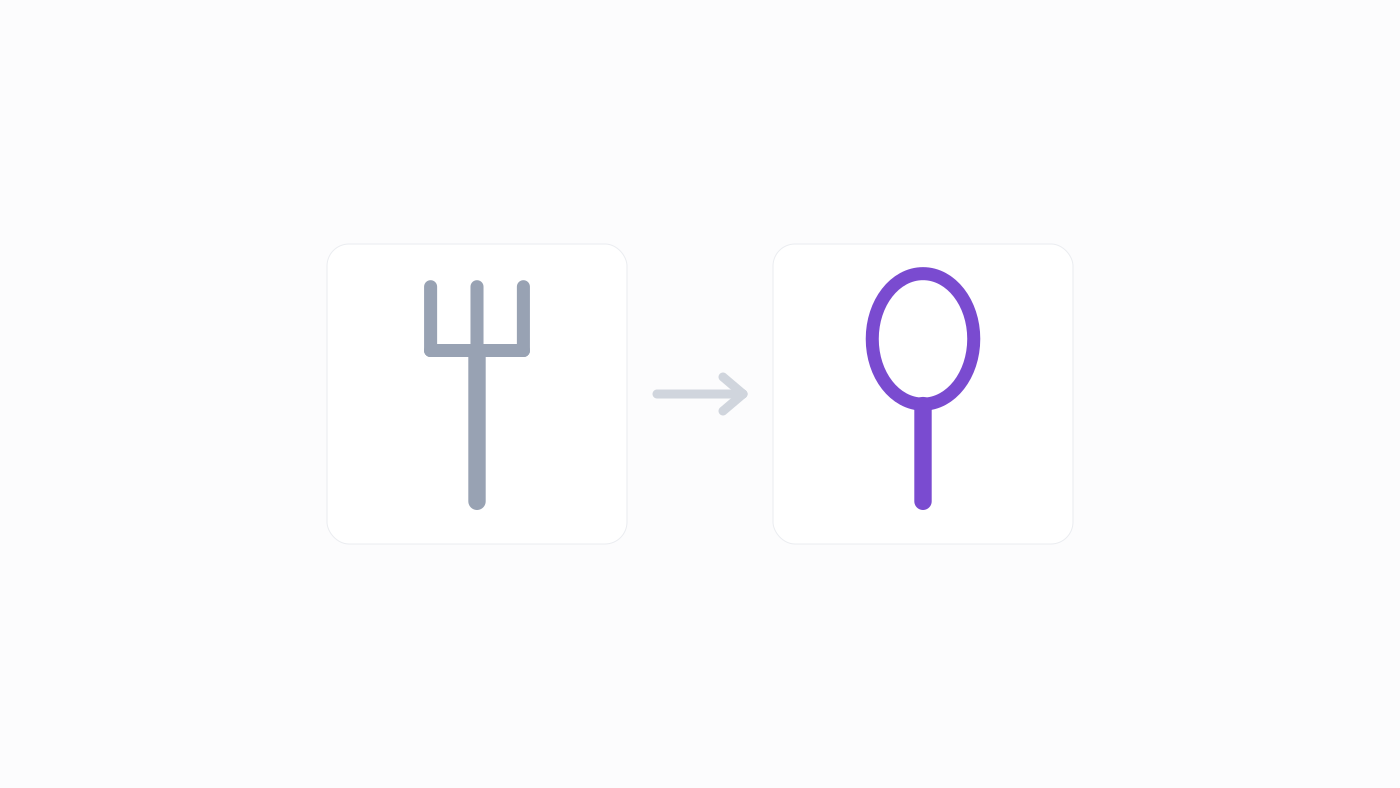
The default setting
The government's own etiquette guidance is plain: Thais prefer to eat with spoons and forks. That is the table you will be sitting at unless the dish is specifically a noodle soup of Chinese origin, where chopsticks do appear.
Arriving from Japan, Korea or China, the reflex to reach for chopsticks is strong and wrong here. Thailand sits inside the region but outside the chopstick zone, and the cutlery on the table tells you so before anyone has to.
Which hand does what
The spoon is the eating utensil, held in the dominant hand and delivering food to the mouth. The fork works in the other hand as a pusher — it loads the spoon rather than travelling to your lips.
That division catches Western visitors as much as Asian ones, because the fork's usual job is exactly the one it does not have here. Watch a nearby table for ten seconds and it becomes obvious.
The rest of the table
Dishes are shared and rice is the anchor: you take from the communal plates onto your own rice rather than claiming a dish. The elders at the table are honoured before eating begins.
Two quiet rules complete it — do not talk or chew loudly, and do not step over food set on the floor or a low table. The feet-and-food rule from the wider etiquette applies at mealtimes too.
Good to know
- Spoon to the mouth, fork as the pusher — never fork to the mouth
- Chopsticks appear mainly with Chinese-origin noodle soups
- Never step over food placed on the floor or a low table