United States
The posted price is never the price, and the tip is not optional.
Most asked
Why do I have to tip, and how much?
Because the wage assumes it. Federal law lets an employer pay a tipped worker $2.13 an hour in cash, as long as tips carry the total to the minimum wage — so the tip is closing a gap, not rewarding service.
Read the answerAt a glance
- Tipping
- Expected, and part of the price
- Sales tax
- Added at the register, not in the price
- Cards
- Taken almost everywhere, cash still useful
- Buying alcohol
- 21 and up, photo ID asked at any age
Arriving
What customs asks you to declare, where a bag can wait, and one long-standing screening rule that has quietly ended.

Where can I leave my luggage for the day?
Not in a station locker — those have largely gone from American stations and airports. Amtrak staffs a baggage counter at a handful of big-city stations, and that is the official answer.

Can I bring food in with me?
Some of it, and the obligation is to declare all of it. Customs penalises the failure to declare rather than the item itself — so the snack you forgot about is a worse problem than the one you wrote down.
Getting around
No national transit card, no national rule on eating, and a rental counter where the waiver you are offered is not insurance.

How do I pay for the subway or bus?
With the contactless card or phone already in your hand, in the larger systems — there is no national transit card because every city runs its own. New York reads your own bank card at the gate and stops charging once you have ridden enough in a week.

Can I eat or drink on the subway?
Eating is not against the rules here, which startles anyone who has just come from Taipei. What the MTA does prohibit is an open container of liquid on the train, and alcohol anywhere on the system.

What is the waiver they offer at the rental counter?
Not insurance, despite how it is sold. A collision damage waiver is the rental company agreeing not to bill you for damage to its own car — which leaves the other driver's car, and the people in it, to something else entirely.
Where you stay
What the nightly rate leaves out, and why the apartment you booked for three nights may not legally be rentable.

Is the nightly rate the price I will actually pay?
Closer than it used to be. Since May 2025 a federal rule requires lodging to show the total up front with mandatory fees included — but the rule bans hiding the fee, not charging it, so a resort fee is still a resort fee.

Can I book an apartment for a few nights?
Not the way you would in most cities, and New York is the sharp case. The host must be registered, must be living in the home while you are there, and no more than two guests are allowed — which took most whole-apartment listings off the market.
Money
The number on the shelf is not the number at the till, there is no refund on the way out, and cash has not gone away.

Can I get the sales tax refunded when I leave?
No, and the reason is structural: sales tax is a state tax, so the federal government has nothing to hand back at the border. Louisiana runs the only visitor refund in the country.

Why is the price at the till higher than the label?
Sales tax is added at the register rather than built into the label, and the rate depends on the city you are standing in, not the country. A shop may include it in the price if it posts a sign saying so — most do not.

Do I need cash here?
Cards will carry almost the whole trip, but cash has not gone away — the Federal Reserve's own survey still counts it in roughly one payment in seven, and four in five people used it in the past month.
At restaurants
Why the tip is structural here rather than optional, and what the service charge on your bill legally is.

Why do I have to tip, and how much?
Because the wage assumes it. Federal law lets an employer pay a tipped worker $2.13 an hour in cash, as long as tips carry the total to the minimum wage — so the tip is closing a gap, not rewarding service.

Is the service charge on my bill a tip?
Legally, no. A compulsory charge added by the restaurant is the restaurant's revenue, not a tip, and the business may keep all of it — which is the opposite of what the wording on most bills suggests.
Phone and internet
Getting a local number, and what to lean on until you have one.

Can I use my own phone here?
Yes, if it is unlocked — and that is the one thing you cannot fix after you land. There is no passport registration to do here; a local eSIM plan is bought in an app in a few minutes.

Where can I get online without a local SIM?
Free public wifi exists, with conditions attached. New York's street kiosks want an email address before they let you on, and Amtrak's onboard wifi is free where it runs but is not built to carry video.
Everyday basics
Smoking, drinking, and being asked for identification — three things the federal government leaves to the states.

Can I drink alcohol on the street?
Assume not. There is no national rule, and the cities that do allow it regulate the container rather than the drink — New Orleans permits an open cup in the French Quarter but bans glass, which is why everyone is holding plastic.
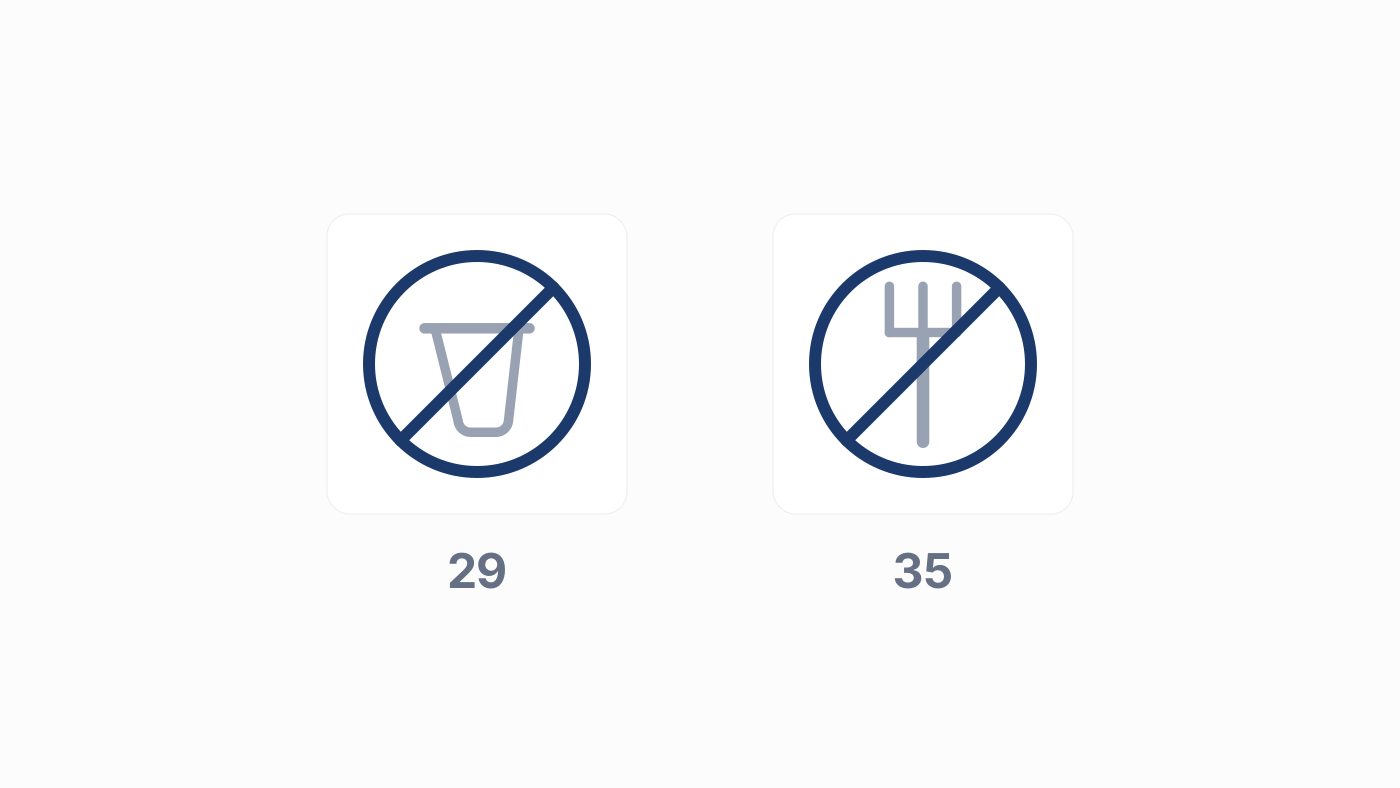
Where can I smoke, and where can't I?
There is no national answer — this is left to the states, and they disagree. As of mid-2024 the CDC counted bars smokefree in 29 states and restaurants in 35, so the honest rule is to assume indoors is out and look for the sign.

Will I be asked for ID to buy alcohol, even at my age?
Expect it whatever your age. The drinking age is 21 everywhere, and in some states the law does not even require an adult to show ID — the staff ask because it is they, not you, who face charges for getting it wrong.
How other countries compare
For a trip that crosses borders — the same question, answered country by country.