Compared across countries
Do you tip?
For a trip that crosses borders — the same question, answered country by country.
The pattern
Six of the seven expect no tip at all. Then there is the United States, where the federal cash wage for a tipped worker is $2.13 an hour and the tip is what carries it to the minimum — which is why it is not a courtesy there but part of the price. The uniformity everywhere else is the finding: one country's wage structure against six where the number on the menu is the number you pay.
-
United States
Because the wage assumes it. Federal law lets an employer pay a tipped worker $2.13 an hour in cash, as long as tips carry the total to the minimum wage — so the tip is closing a gap, not rewarding service.
-
Japan
No. Tipping is not expected, and money left behind is usually treated as forgotten, not as a gift.
-
China
No. Tipping is not customary, and handing over extra money will often be refused outright.
-
Thailand
Optional, and never expected at street level. Leaving the coins from your change is the usual gesture.
-
Vietnam
Not required, and not a local habit. It has become common only where tourism is the main business.
-
South Korea
No. Tipping is not a Korean custom and staff do not expect it. Where a charge exists, it is printed on the bill as a service charge.
-
Taiwan
No. Sit-down restaurants may add a service charge, and where they do, that settles it.
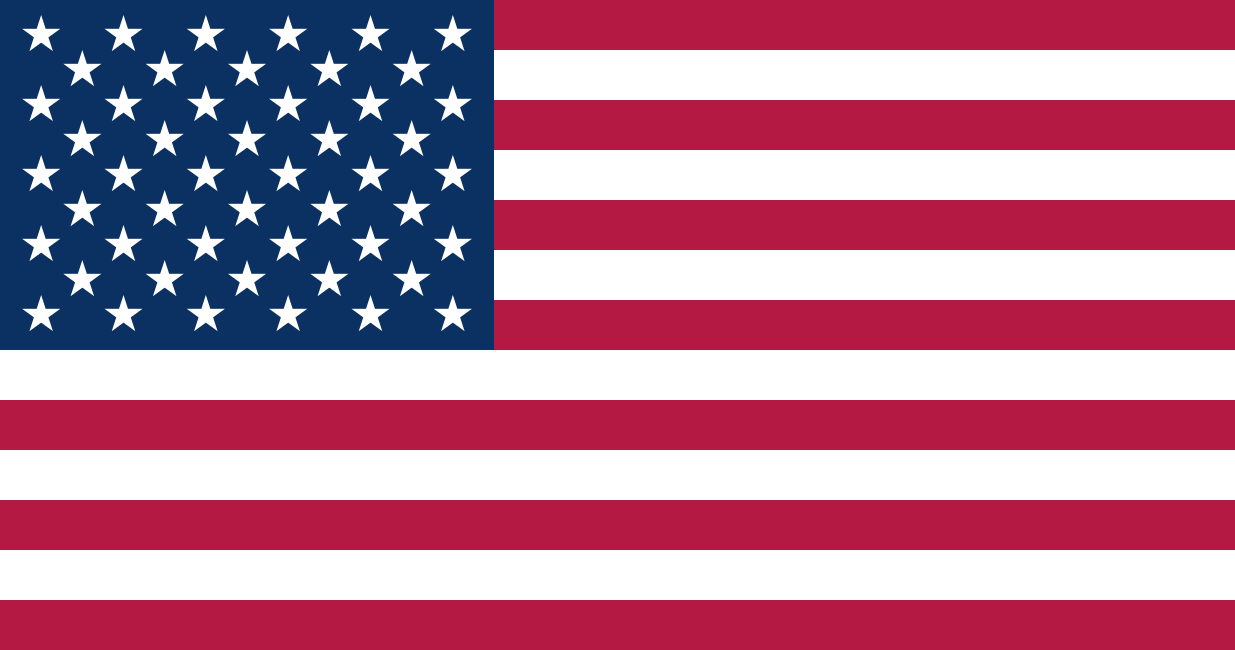 United States
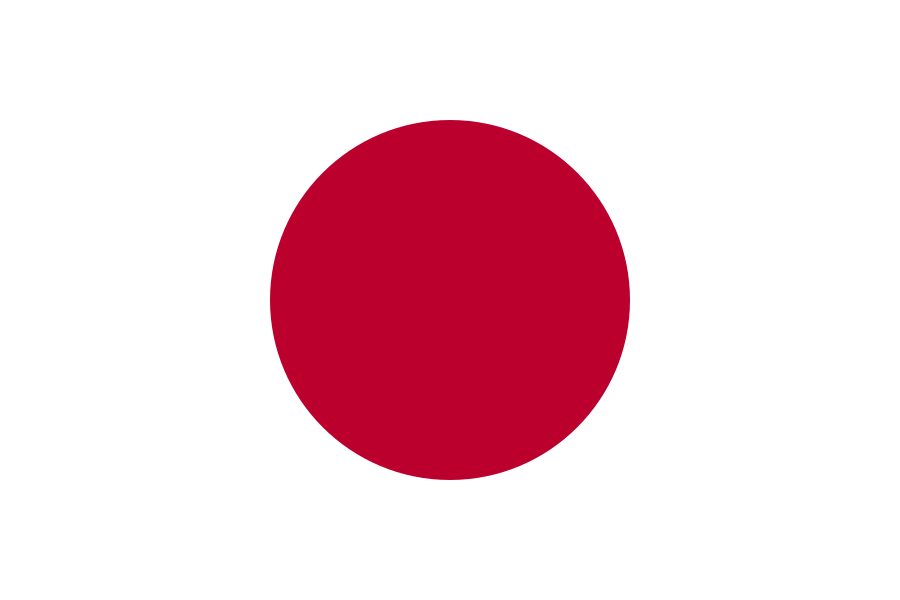 Japan
Japan China
China Thailand
 Vietnam
 South Korea
 Taiwan