What number do I call in an emergency?
Short answer
110 for police, 119 for fire and ambulance. If your phone has no usable signal, 112 still connects.
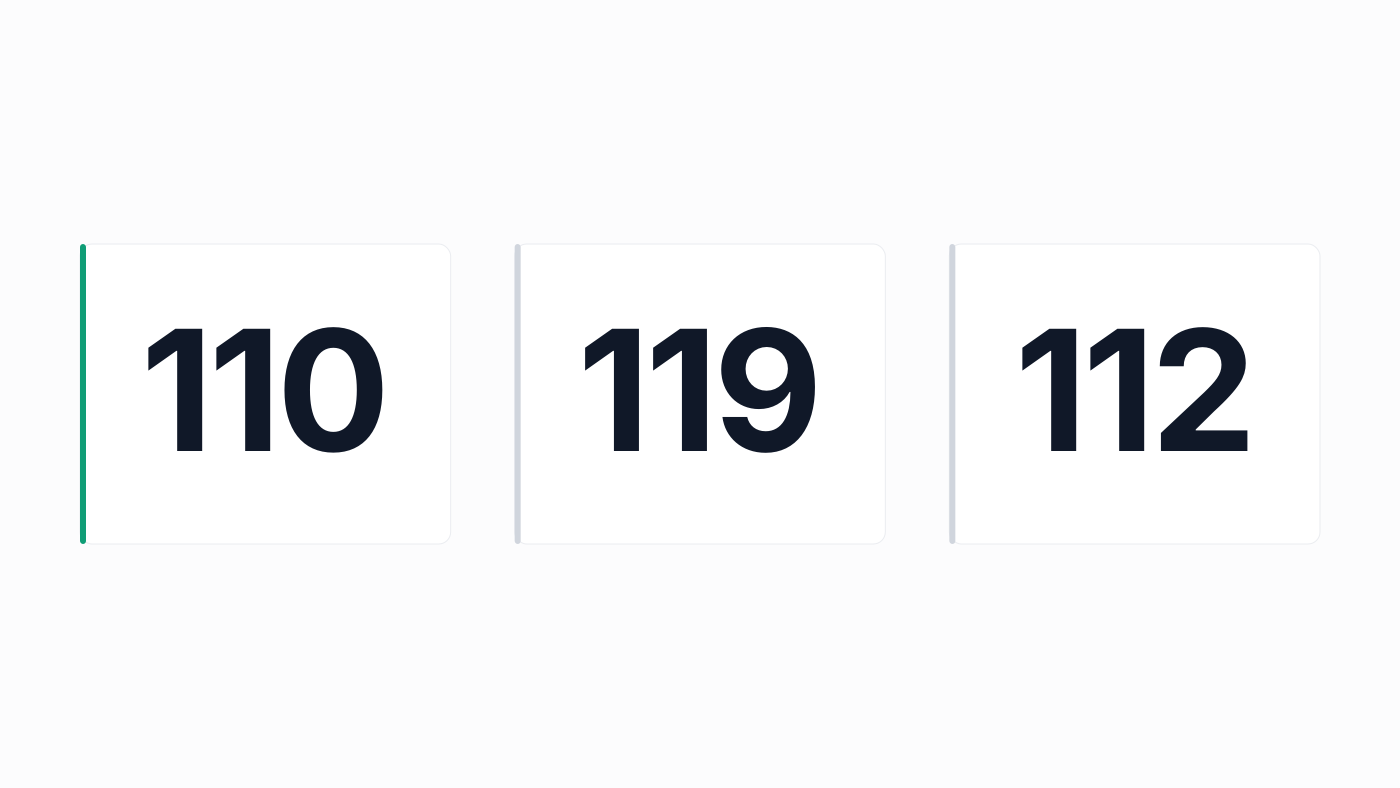
The split, and where it matches your habits
110 reaches the police; 119 covers both fire and ambulance. If you are arriving from Japan the numbers work the way you already know them; if you are arriving from Korea, note that the roles of 112-style and 119-style numbers do not map one to one.
The extra number here is 112 — the emergency call that still connects when your phone's reception is too poor for a normal call. It is the number of last resort rather than the first dial.
The line below an emergency
The Tourism Administration runs a 24-hour toll-free travel information hotline on 0800-011-765. Lost property, a booking tangle, directions at midnight — that class of problem belongs there rather than on 110.
Keeping the two apart is the practical skill: the emergency lines dispatch people, and the hotline dispenses answers.
Before you need any of it
Save 110, 119 and the hotline when you land, while nothing is wrong. Emergency calls are free, so an empty prepaid balance does not stop them.
If you cannot manage the call in Mandarin, say the language you need at the start and keep the sentence short: what happened, where you are.
Good to know
- 119 covers both fire and ambulance
- 112 connects even on poor reception — last resort, not first dial
- 0800-011-765 is the 24-hour tourist hotline for everything below an emergency




 110 for police, 119 for fire or ambulance. Both are free and work from any phone.
 110 police, 119 fire, 120 ambulance, 122 traffic accidents. Calls are free, and 110 answers in eight languages.
 191 is the general emergency line and 1669 gets an ambulance. As a visitor, the number to actually memorise is 1155 — the Tourist Police.
 Three numbers, split by service: 113 police, 114 fire, 115 ambulance.
 112 for police, 119 for fire or ambulance. 110 is not an emergency number here — it is for ordinary public-service enquiries.