What number do I call in an emergency?
Short answer
112 for police, 119 for fire or ambulance. 110 is not an emergency number here — it is for ordinary public-service enquiries.
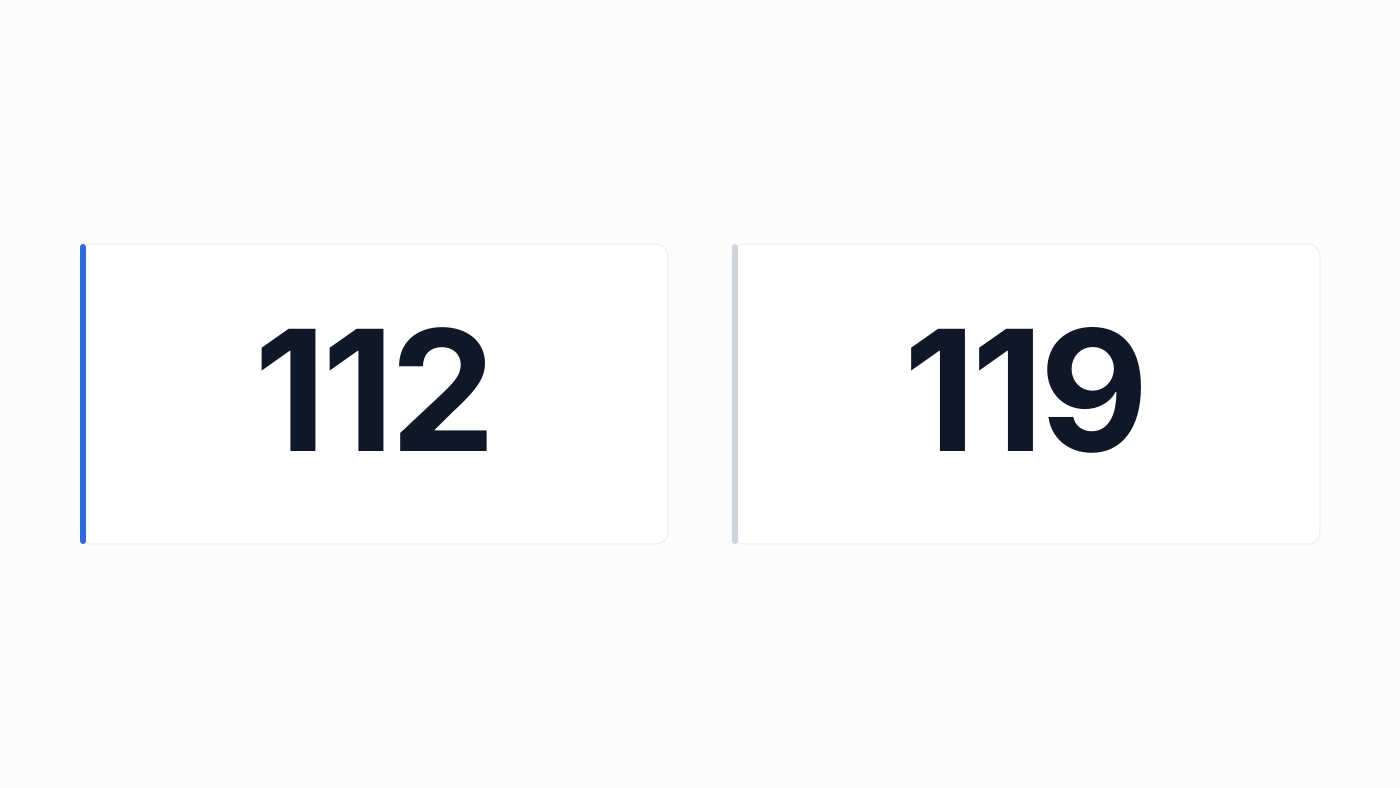
Three numbers, only two of them urgent
112 reaches the police. 119 reaches the fire service, which also handles ambulances and rescue. Both are free and both work from any phone.
110 is the third number in the integrated system, and it is deliberately not an emergency line. It handles public-service enquiries — a broken street fixture, a noise problem, a question about a government office. Calling it in a real emergency wastes the minutes that matter.
The trap if you are visiting more than one country
In Japan, 110 is the police number. Here it is the civil-service enquiry line, and the police are on 112.
The same three digits reach an emergency dispatcher in one country and a general enquiries desk in the other. On a trip covering both, this is the pair worth writing down.
Interpretation, and the number that is not an emergency line
Both emergency numbers can bring an interpreter onto the call, so not speaking Korean does not stop you from using them.
For everything below the emergency threshold there is a separate 24-hour travel helpline run by the tourism authority, staffed in several languages. It is the right call for a lost item, a dispute with a shop, or directions at midnight — and it keeps 119 free for the people who need it.
Good to know
- 110 here is the opposite of 110 in Japan — do not carry one habit into the other country
- Ask for an interpreter at the start of the call rather than struggling through it


 110 for police, 119 for fire or ambulance. Both are free and work from any phone.
 110 police, 119 fire, 120 ambulance, 122 traffic accidents. Calls are free, and 110 answers in eight languages.
 191 is the general emergency line and 1669 gets an ambulance. As a visitor, the number to actually memorise is 1155 — the Tourist Police.
 Three numbers, split by service: 113 police, 114 fire, 115 ambulance.
 110 for police, 119 for fire and ambulance. If your phone has no usable signal, 112 still connects.