Do I need a plug adapter here?
Short answer
Taiwan runs on 110V with flat two-pin sockets — the American pattern. European and Australian plugs need an adapter; some devices need more.
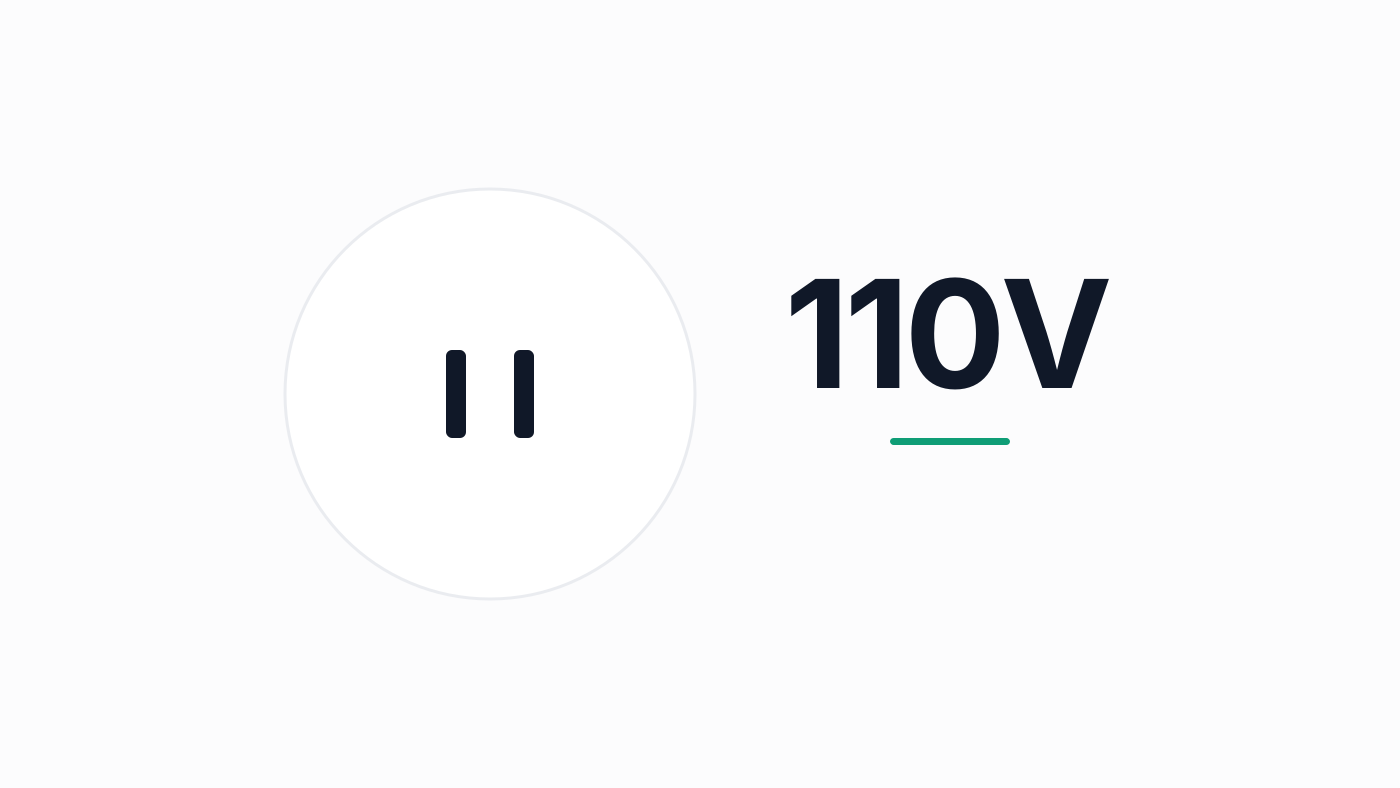
The American pattern, not the Asian mainland one
The current here is 110 volts at 60 cycles, on flat two-pin sockets. Gear from the US or Japan plugs straight in; the tourism administration's own guidance says devices from Europe, Australia or Southeast Asia need an adaptor or transformer.
That makes Taiwan the odd one out on this side of the map — China and Korea run 220V, so an itinerary crossing between them and Taiwan needs both answers packed.
Adapter or transformer — the difference matters
An adapter fixes the shape of the pins; a transformer fixes the voltage. A phone or laptop charger marked 100–240V needs the shape fixed at most. A 220–240V-only appliance needs the voltage fixed, and that is a heavier, rarer thing to carry.
Check the fine print on each charger brick before deciding you need anything at all — most modern electronics cover the whole range.
The 220V socket you might meet
Many buildings do carry some 220-volt sockets, typically for air conditioners. They exist for the building's equipment, not for guests.
The practical rule: use the ordinary flat two-pin outlets for your devices, and treat any unusual-looking socket as not yours to experiment with.
Good to know
- 110V flat two-pin — US and Japanese plugs fit as they are
- Coming from China or Korea (220V)? Pack for both standards
- Some building sockets are 220V for air conditioners — not for your devices



 Japan runs on 100 volts — the lowest mains voltage anywhere. Most chargers cope; anything with a heating element or a motor often does not.
 Often not. Sockets here accept flat two-pin, round two-pin and angled three-pin plugs, so most travellers' plugs fit as they are.
 Your plug probably fits — Thai sockets take flat American pins and round European ones alike. That is the trap, because the supply is 220 volts: fitting and working are two different questions.
 220 volts, and most sockets take two round pins. European plugs go in as they are; American and Japanese ones need an adapter — which the tourism board says any electrical shop will sell you.
 Yes, unless you already carry a European one. Korea runs 220V at 60Hz on round two-pin sockets.