Can you haggle over prices?
Short answer
At markets and stalls, yes. Where a price is displayed it is not a starting point — displaying it is a legal duty, and the government's own advice draws the line in the same place: prices run higher for foreigners "outside of regular shops that have fixed prices".

The tag is where the line falls
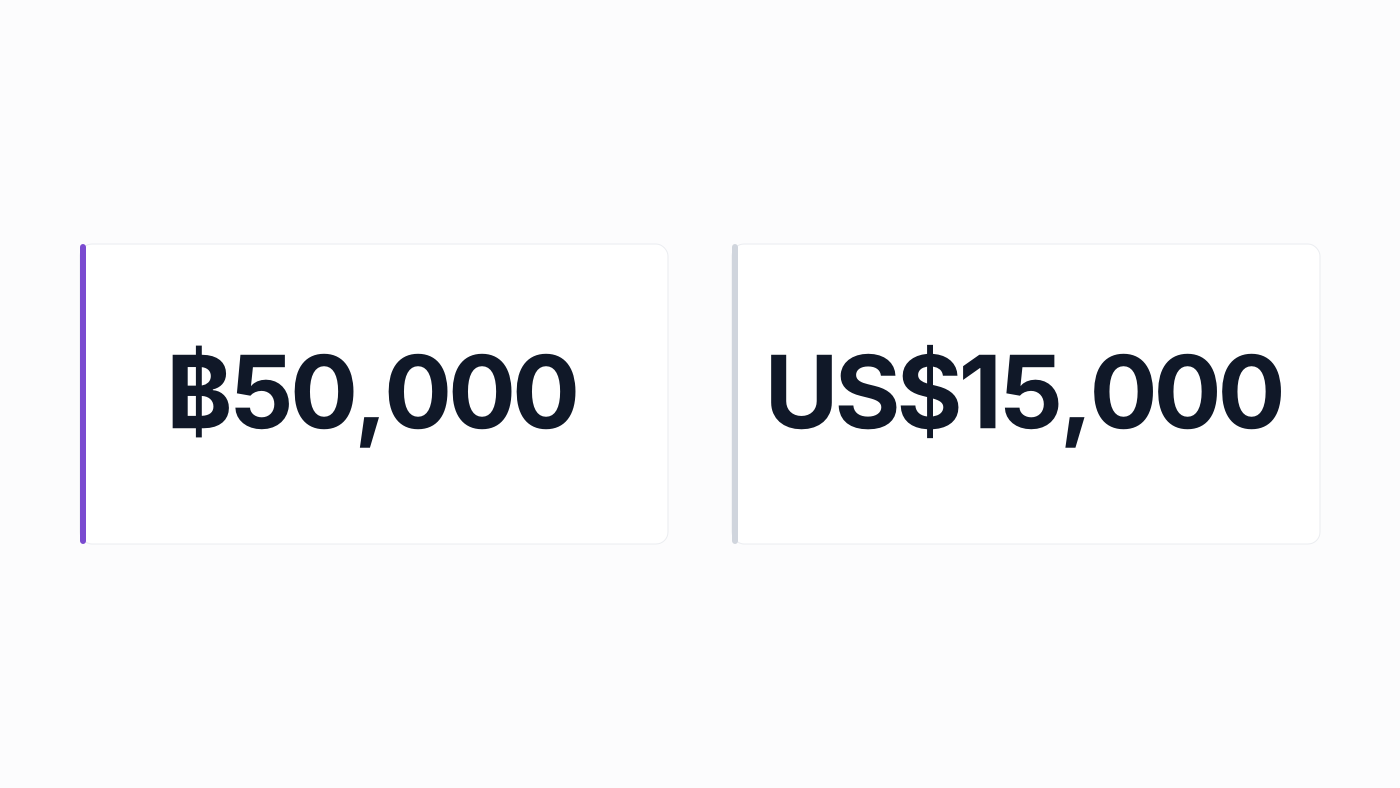
Displaying the price is not the shop's courtesy, it is its obligation. Section 28 of the Prices of Goods and Services Act B.E. 2542 (1999) lets the price commission require operators to display the price of goods and services, and Section 40 fines a business up to 10,000 baht for not displaying it or for not following the rules on how.
So a printed number is the end of the conversation rather than the beginning of one. Supermarkets, malls, chain stores and restaurants sit firmly on that side, and treating a displayed price as an opening bid reads badly.
Where it does apply, and in what register
The government's own guidance for tourists puts the boundary in the same place. It warns that "product prices for foreigners are more expensive in some places than for Thai people" and locates the problem "outside of regular shops that have fixed prices" — markets, stalls, souvenir vendors, and anything a tuk-tuk driver quotes.
Its advice on how is one line: "Be prepared to bargain, but without being too hard-nosed." Research first — compare a few vendors, or check online — so the number you push back with is a real one rather than a guess. That is the same register Vietnam's tourism board calls gentle negotiation.
When it stops being bargaining
There is a point where an inflated number is not a negotiation but a complaint, and the state treats it that way: this guidance sits inside a page about risks to tourists, alongside taxi scams and pickpocketing, not inside a page about culture.
Two numbers come with it. The Department of Internal Trade takes price complaints on 1569, and the Tourist Police answer on 1155. Charging above a displayed price is separately an offence, so the tag protects you as much as it stops you.
Good to know
- A displayed price is a legal duty, not a courtesy — and not an opening bid
- Markets, stalls and tuk-tuks are where the number is soft
- The official line: bargain, but without being too hard-nosed
- Overcharged? Department of Internal Trade 1569, Tourist Police 1155

 No. The marked price is the price, and asking for a discount will be met with polite confusion.
 Not where a price tag hangs — marked prices are a legal requirement, and the tag is a ceiling. Markets without tags are a different world.
 In markets and casual shops, yes — the tourism board's own word for it is gentle negotiation. Ask a few vendors first so you know what the number should be.
 Only in traditional markets, and only gently. Everywhere else the price is fixed and asking reads as odd.